U.S. Sentencing Commission's
2025 Annual Report
 Introduction
The United States Sentencing Commission (“the Commission”) was created by the Sentencing Reform Act provisions of the Comprehensive Crime Control Act of 1984. The Commission is a bipartisan, independent agency in the Judicial Branch of the federal government, with statutory duties that include:
- approving sentencing guidelines to be considered by sentencing judges in all federal criminal cases;
- collecting, analyzing, and reporting sentencing data systematically to detect new criminal trends, assess federal sentencing policies, and serve as a clearinghouse for federal sentencing statistics;
- conducting research on sentencing issues and serving as an information center for the collection, preparation, and dissemination of information on federal sentencing practices; and
- providing specialized training to judges, probation officers, staff attorneys, law clerks, prosecutors, defense attorneys, and other members of the federal criminal justice community on application of the federal sentencing guidelines and federal sentencing.
In 2025, the Commission unanimously approved several guideline amendments to improve the fairness and equity of federal sentencing. Consistent with all of its work during the past several years, the 2025 amendments were a result of data and significant public feedback to address issues important to federal judges, Members of Congress, executive branch officials, attorneys, probation officers, advisory groups and advocacy organizations, academia, incarcerated individuals and others.
Notably, the 2025 Guideline Amendments encourage courts to take an individualized approach to the imposition and management of supervised release in an approach similar to bipartisan, bicameral legislation. In conjunction with this amendment, the Commission launched a “Supervised Release Toolkit,” which provides users with an eLearning course, interactive data, and a comprehensive history of relevant governing statutes related to supervised release.
The Commission has also begun to routinely collect and analyze data on approximately 20,000 supervised release revocations each year.
The 2025 amendments also address the harms of “fake pills” containing fentanyl, while ensuring that sentences better reflect a defendant’s role and function in drug trafficking organizations.
In response to concerns from the Department of Justice and others about the proliferation of “Machine Gun Conversion Devices” (MCDs), which pose a heightened danger to the public, the 2025 amendments more fully account for MCDs in the primary firearms guideline. The Commission’s data reflects an increase in firearms cases involving MCDs, including instances where individuals possessed four or more of these devices.
In addition, the Commission simplified the “three-step approach” courts use when applying the guidelines, and it resolved certain circuit court conflicts to ensure more consistent application of the federal sentencing guidelines.
The Commission is a clearinghouse for federal sentencing data, research, and statistics. It continually releases new and informative sentencing reports and resources, as well as training and materials on timely matters in the criminal justice system.
In 2025, the Commission issued a report titled “Overdoses in Federal Drug Trafficking Crimes.” According to the Commission’s data in the report, while overdoses accounted for less than two percent of federal drug trafficking cases, the prevalence of overdoses increased by 44 percent from FY 2019-2025. Fentanyl and fentanyl analogues were involved in 80 percent of the overdose cases studied.
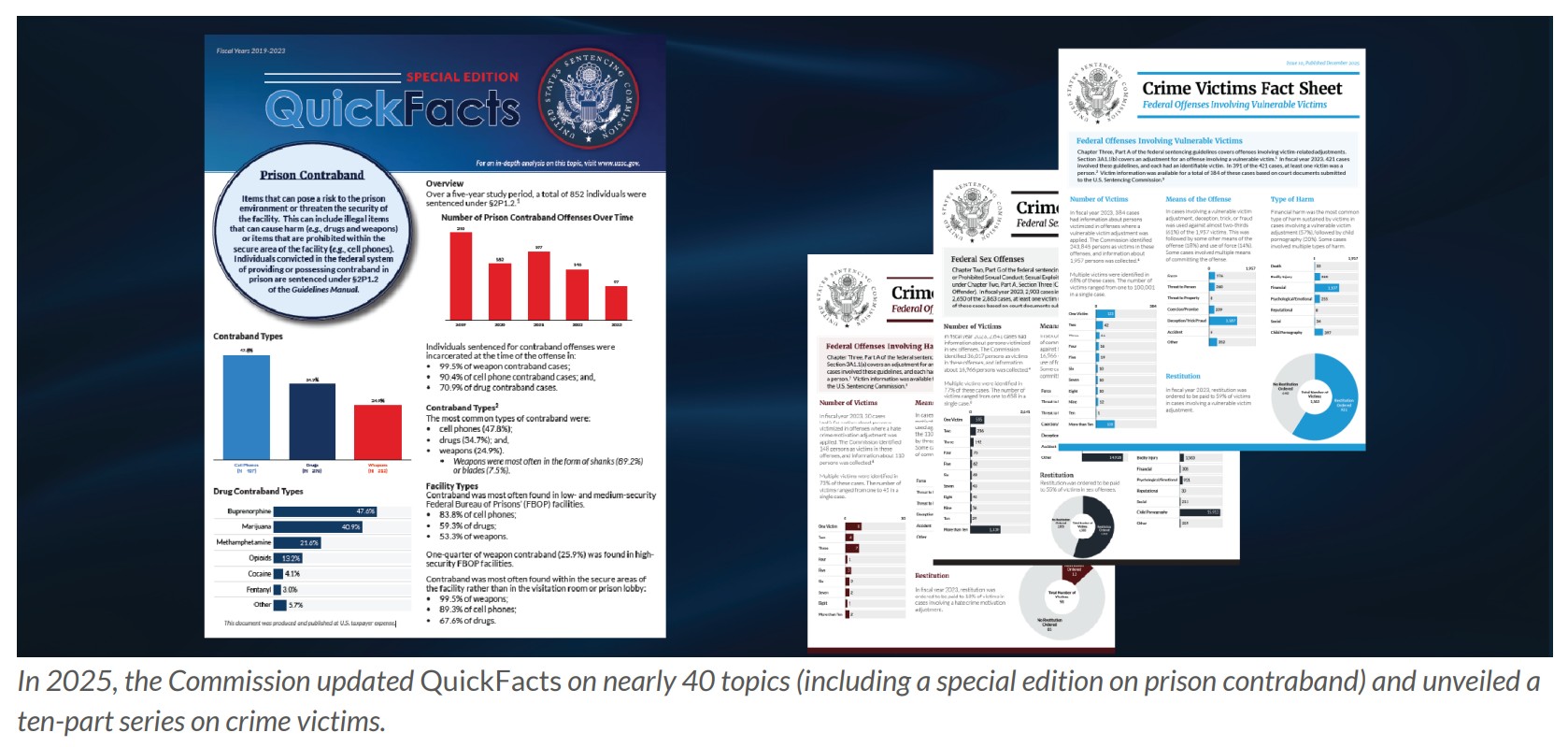
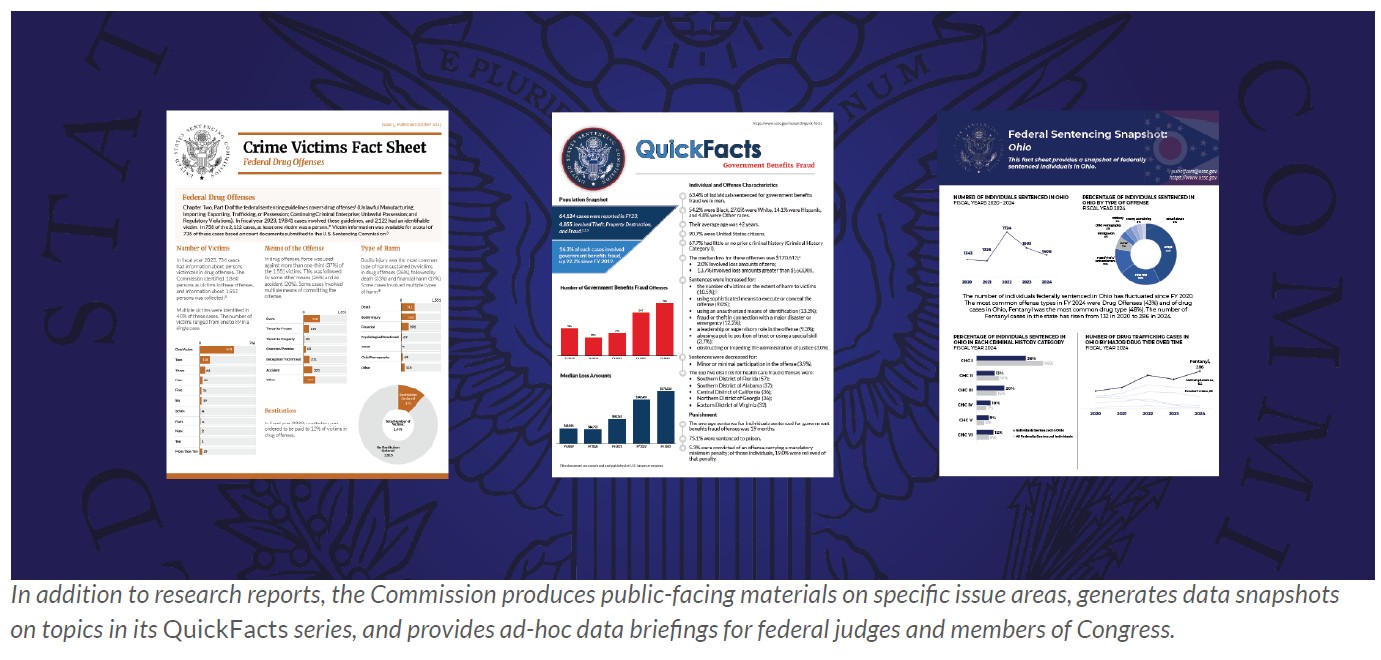
The Commission’s QuickFacts are updated regularly and provide recent and easily accessible data on issues ranging from drugs and firearms offenses to economic and sex offenses. In 2025, the Commission updated QuickFacts on nearly 40 relevant topics including a special edition on prison contraband. According to the Commission’s data, cellphones remain the predominant type of prison contraband.
The Commission also unveiled a ten-part series on crime victims. This series provides data and statistics on victims of drug and hate crimes, and vulnerable victims, among others. For example, in its analysis, the Commission had information about individuals victimized in 1,455 economic crime cases and collected information regarding more than 8,600 persons identified as victims in these offenses.
Interest in the Commission’s work continually increases. In 2025, traffic to the Commission’s website reached more than 3.6 million views and nearly 1.4 million users.
These figures are driven by the Commission’s frequent development of innovative and interactive statistical and data resources as well as new educational resource toolkits.
Among the Commission’s useful interactive tools that are used on an ongoing basis by judges, probation officers, legal practitioners and others is the Judiciary Sentencing INformation (JSIN) resource. JSIN is an online tool that provides users with quick access to granular sentencing data for similarly situated individuals, including the types of sentences imposed, as well as average and median sentences. JSIN was accessed nearly 5,000 times per month by more than 16,000 users in 2025.
In addition, the Commission continues to expand features on the Interactive Data Analyzer (IDA), an online tool that allows users to easily sort and analyze federal sentencing data by district, circuit, or state, and by specific crime type.
In 2025, the Commission expanded IDA to include a new section on individual characteristics, including race, gender, citizenship, and education. IDA was accessed nearly 1,600 times per month by more than 11,000 users throughout the year.
The Commission also maintains website resource pages on Federal Bureau of Prisons (BOP) programs such as the Residential Drug Abuse Treatment Program (RDAP), and earned time credits under the First Step Act. These resources are updated regularly.
To make this information available and accessible, the Commission collects and analyzes information from 315,000 documents received from the courts each year. In 2025, these documents reported information on more than 66,000 original sentencings and more than 11,000 resentencings or motions for sentence reductions.
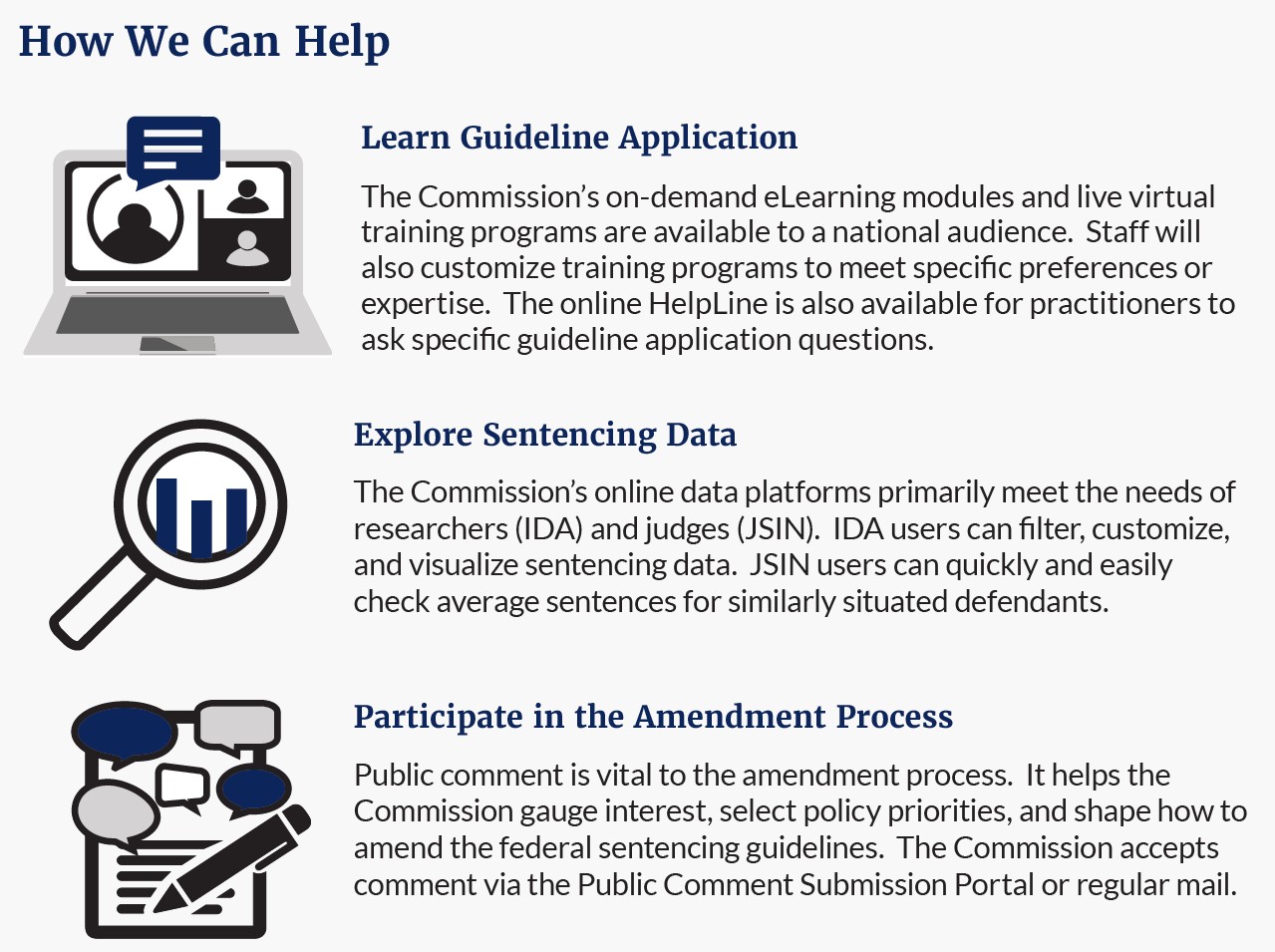
In addition, the Commission continues to provide specialized seminars, workshops, and training programs for judges, probation officers, law clerks, prosecutors, and defense attorneys on application of the guidelines and federal sentencing generally. In 2025, the Commission trained individuals from all 94 federal districts.
This training included 50 in-person programs attended by approximately 2,700 individuals and nearly 40 virtual training programs attended by more than 7,700. Nearly 700 judges, probation officers, defense attorneys, prosecutors and others attended the 2025 Annual National Seminar, and the Annual Judges’ Seminar included 65 judges from districts across the country.
The Commission’s HelpLine, which is maintained to assist judges, practitioners, and probation officers with guideline application and related questions, responded to more than 3,000 inquiries in 2025.
Agency Overview
Commissioners
The Commission is a bipartisan body that consists of up to seven voting members appointed to staggered six-year terms by the President with the advice and consent of the Senate. By statute, at least three of the commissioners shall be federal judges, and no more than four may be members of the same political party. The Attorney General (or the Attorney General’s designee) and the Chairperson of the United States Parole Commission are ex officio members of the Commission.
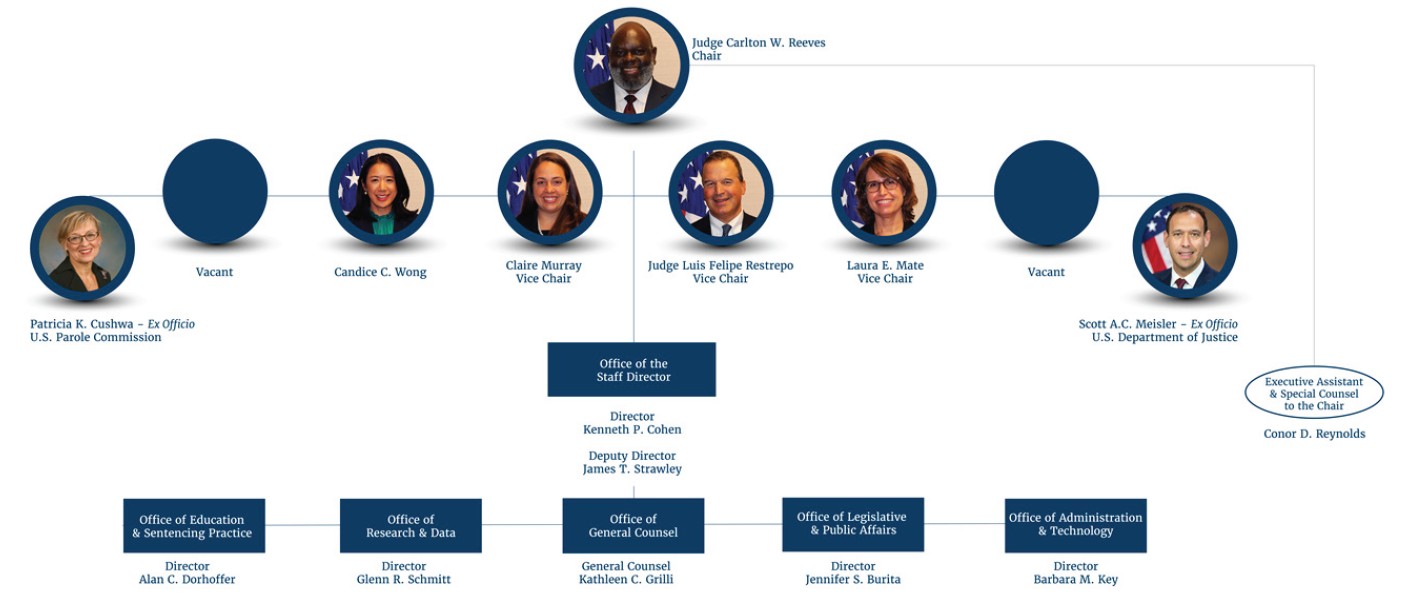
In 2025, the Commission operated with a quorum of voting members: Judge Carlton W. Reeves (Chair), Judge Luis Felipe Restrepo (Vice Chair), Laura Mate (Vice Chair), Claire Murray (Vice Chair), and Candice C. Wong (Commissioners’ bios).
Organization
The Commission staff are divided into the Offices of the Staff Director, General Counsel, Education and Sentencing Practice, Research and Data, Legislative and Public Affairs, and Administration and Technology.
The Office of the Staff Director supervises and coordinates all agency functions. The director of each office reports to the staff director, who in turn reports to the Commission chair.
The Office of General Counsel supports the Commission on a variety of legal issues, including the formulation and application of the guidelines and guideline amendments, legislative proposals, and statutory interpretations. Legal staff monitor the district and circuit courts’ application and interpretation of the guidelines and advise commissioners about statutes affecting the Commission’s work.
In addition, the office performs all drafting services for the Commission, prepares the Guidelines Manual for printing, formally manages and maintains all papers and exhibits received by the Commission that constitute requests for Commission action on sentencing policy development, coordinates the Commission’s policy initiatives, and oversees the annual guideline amendment cycle, including providing notice to the public of proposed amendments and obtaining witnesses for public hearings. The legal staff also provides training support in conjunction with the Office of Education and Sentencing Practice.
The Office of Education and Sentencing Practice performs the lead role in teaching guideline application to judges, probation officers, prosecuting and defense attorneys, and other criminal justice professionals. The staff develops training materials, participates in the sentencing guideline segments of training programs sponsored by other agencies, works in conjunction with the Administrative Office of the U.S. Courts and the Federal Judicial Center to create webcasts that are aired on the Commission’s website, and helps inform the Commission about current guideline application practices.
The office also operates the “HelpLine” to respond to guideline application questions from guideline practitioners.
The Office of Research and Data provides statistical and other social science research and analyses on specific sentencing issues and federal crime. The office receives documents from the federal courts concerning the sentences imposed, analyzes, and enters information from those documents into the Commission’s comprehensive computer database, and creates annual datafiles of sentencing information. Individual offender datafiles (without individual identifiers) from fiscal year 2002 to the present are available on the Commission’s website.
Working with the Office of the General Counsel, the Office of Research and Data also collects information on organizations convicted of crimes and on appeals filed in individual and organizational cases.
The office studies a variety of sentencing issues, including changes in the types and severity of federal crimes, demographic characteristics and criminal history of federally sentenced individuals, and sentencing trends. The office creates periodic reports on federal sentencing practices and tracks the application of the sentencing guidelines. These reports provide data concerning the types of crimes committed, the individuals who commit those crimes, how courts sentence individuals, and use the guidelines.
The office also provides projections of the impact on the federal prison population of proposed legislation and proposed guideline amendments. The reports are distributed to the courts, Congress, the Executive Branch, and the public.
The Office of Legislative and Public Affairs serves as the Commission’s liaison with Congress on sentencing matters, monitors Congress’s criminal law agenda and hearings, analyzes legislative proposals, and takes the lead role in responding to congressional inquiries, including specific requests for federal sentencing data. The office also provides services and information to other external entities, including the judiciary, Executive branch agencies, academia, and advocacy groups. The office works closely with the Office of General Counsel on analyses of proposed and recently enacted legislation.
The office is also responsible for the agency’s public information functions, responding to inquiries and requests for information from the media, the public, Congress, academia and government agencies. It plays a primary role in coordinating the production, editing, printing, and dissemination of all Commission publications, including the Guidelines Manual, research publications, and reports to Congress. The office is also responsible for the Commission’s website and social media communications and coordinates the Commission’s public hearings and meetings.
The Office of Administration and Technology provides general support to commissioners and staff regarding budget and finance, contracting, human resources, facilities, and a variety of other office activities and functions.
This office includes two technology-related units: the Information Technology and the Information Systems units. Together, these two units provide the Commission with the technological support necessary to operate its computer networks, remote capabilities, cybersecurity, website, records management, and its extensive information systems applications.
Budget and Expenditures
For fiscal year 2025, the Commission received an annual appropriation of $21,641,000 to continue to fulfill statutory duties envisioned by the Sentencing Reform Act of 1984. This level of funding was unchanged from fiscal year 2024. The Commission continues to maximize its existing resources by prioritizing cost-containment and efficiency.
FY 2025 Activity Overview
The Commission is the leading and primary resource for federal sentencing data and analysis relating to the fairness and effectiveness of sentencing and improving recidivism outcomes, with the goal of using federal resources efficiently and appropriately. The subsequent sections of this report demonstrate the Commission’s commitment to these principles and to meeting its statutory requirements:
- Sentencing Policy Development
- Conducting Research
- Collecting and Reporting Sentencing Data
- Training and Outreach
Sentencing Policy Development
The sentencing guidelines established by the Commission are core to the agency’s mission. They provide federal judges with fair and consistent sentencing ranges to consult at sentencing by:
- incorporating the purposes of sentencing (i.e., just punishment, deterrence, incapacitation, and rehabilitation);
- providing certainty and fairness in meeting the purposes of sentencing by avoiding unwarranted disparity among individuals with similar characteristics convicted of similar criminal conduct, while permitting sufficient judicial flexibility to consider relevant aggravating and mitigating factors; and
- considering, to the extent practicable, advancement in the knowledge of human behavior as it relates to the criminal justice process.
By statute, the Commission must submit guideline amendments to Congress for its review no later than May 1 of any given year. In 2025, the Commission unanimously approved several amendments to the Guidelines Manual that addressed several pressing policy matters as well as long-standing circuit conflicts. These amendments, which are the result of significant public feedback and data analysis, aim to improve the fairness, effectiveness, and consistent application of federal sentencing.
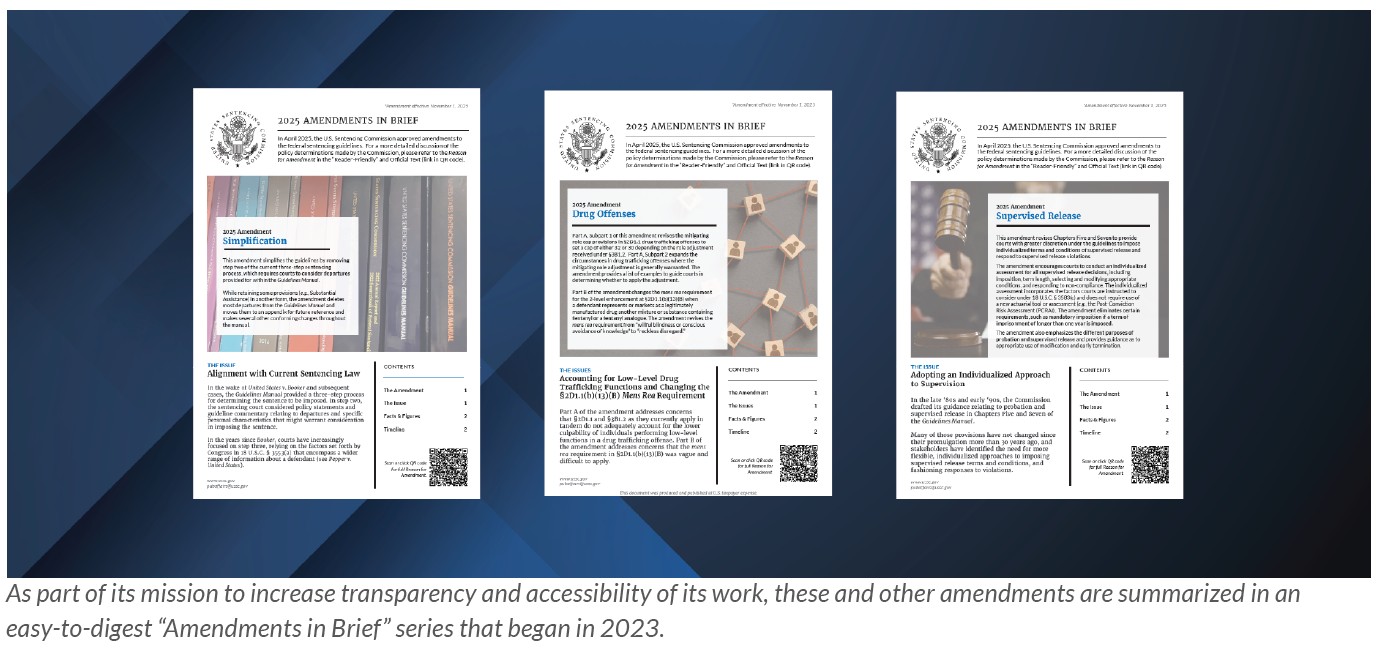
The 2025 Guideline Amendments include:
Supervised Release
The Commission approved an amendment that updates the supervised release guidelines by emphasizing the importance of individualized decision-making by judges at all relevant stages, including imposition, modification, extension, termination, and revocation of supervised release. These changes respond to widespread concern that supervised release often is ordered reflexively, potentially diverting supervision resources from individuals who need them most. (Amendment-In-Brief)
This amendment followed a roundtable discussion with experts on the matter, as well as extensive public comment and testimony from Members of Congress, the Committee on Criminal Law of the Judicial Conference of the United States, the Department of Justice, the Federal Public and Community Defenders, the Commission’s advisory groups, law professors, formerly incarcerated individuals, and others.
In conjunction with the supervised release amendment, the Commission unveiled a Supervised Release Toolkit to serve as a resource on its website. This toolkit includes information on relevant statutes and sentencing guidelines, research and data, the legal framework of supervised release, and historical background.
The Commission is routinely collecting and analyzing data on approximately 20,000 supervised release revocations each year. The Commission expects to release data about these cases in 2026.
Drug Offenses
Following a multi-year study on drug trafficking, which included extensive data analysis, public comment, a roundtable discussion with experts, and a public hearing, the Commission approved an amendment to ensure that an individual’s sentence is more commensurate with their role in a drug trafficking offense or organization. In addition, to address the continuing danger associated with the misrepresentation of fake prescription pills containing fentanyl or a fentanyl analogue, the Commission approved an amendment that provides a sentencing enhancement if an individual knowingly misrepresented or marketed as another substance a mixture or substance containing fentanyl or a fentanyl analogue. (Amendment-In-Brief)
Firearm Offenses
In response to concerns from the Department of Justice and others about the proliferation of “Machine Gun Conversion Devices” (MCDs), which pose a heightened danger to the public, the Commission approved an amendment to more fully account for MCDs in the primary firearms guidelines. The Department of Justice reported a 570 percent rise in MCD recoveries in 2021, compared to 2017. The Commission’s data also reflects an increase in firearms cases involving MCD’s where individuals possessed four or more of these devices. (Amendment-In-Brief)
Simplification
Following significant public comment and a multi-year effort to simplify application of the Guidelines Manual, the Commission removed one of the three steps in the sentencing process. In United States v. Booker, 543 U.S. 220 (2005), the Supreme Court rendered the guidelines advisory, and in the years since, the frequency of departures has steadily declined as courts rely on variances to a greater extent. By eliminating departures, the Commission’s amendment better aligns the Guidelines Manual with current practices and simplifies the guidelines application process. (Amendment-In-Brief)
Circuit Conflicts
The Commission also addressed certain circuit conflicts to promote uniformity and consistency in guideline application. (Amendment-In-Brief)
In addition, the Commission continues to implement federal legislation and directives as warranted.
Public Outreach
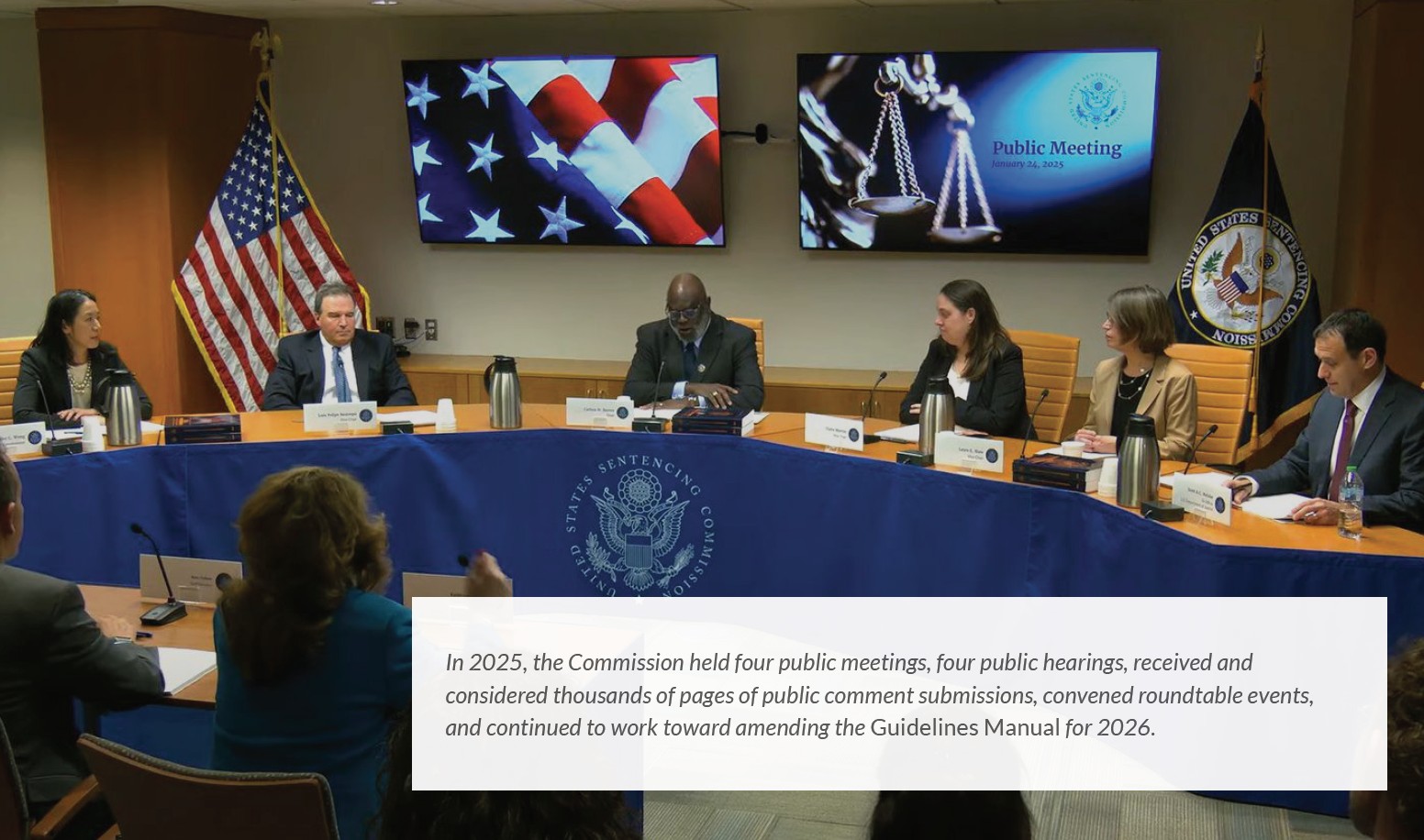
The Commission continuously expands and strengthens its public outreach efforts in a cost-efficient manner. Public comment is imperative to the Commission and helps inform its work and policy priorities.
In 2025, the Commission received nearly 2,500 pages of public comment from federal judges, Members of Congress, executive branch officials, attorneys, probation officers, advisory groups and advocacy organizations, academia, incarcerated individuals and their families and others.
This public comment was considered as part of the guideline amendment process in 2025 and advised the Commission’s policy priorities for 2026 and beyond, which include:
- Providing courts with additional guidance on selecting the appropriate sentencing option (e.g., imprisonment, probation, or fine).
- Further examination of the penalty structure for certain drug trafficking offenses, including those involving methamphetamine and fentanyl.
- Examination of whether the fraud guidelines appropriately reflect the culpability of a defendant and harm to victims.
- Continued exploration of ways to simplify the Guidelines.
- Examination of whether the Guidelines provide appropriate adjustments for good behavior.
- Examination of offenses involving sophisticated means.
- Examination of the human smuggling guideline to ensure it appropriately accounts for a range of factors.
Because of the Commission’s continued emphasis on public involvement in its work, the number of users and views on the website continue to increase.
In 2025, traffic to the Commission’s website reached more than 3.6 million views and nearly 1.4 million users. These figures are driven by the Commission’s frequent development of innovative and interactive statistical and data resources as well as new educational resource toolkits.
Advisory Groups
The Commission’s advisory groups are comprised of experts representing different aspects of the criminal justice system who provide Commissioners with useful insight and perspectives on federal sentencing policy matters.
Standing advisory groups include:
The Practitioners Advisory Group, which provides the Commissioners with its views on federal sentencing issues and disseminates this information to defense attorneys and to others in the defense community.
The Probation Officers Advisory Group provides the Commission with the perspectives of U.S. Probation Officers.
The Tribal Issues Advisory Group considers and relays views to the Commission on federal sentencing matters as they relate to American Indian and Alaska Native defendants and victims, and offenses committed in Indian Country.
The Victims’ Rights Advisory Group provides the Commission with views on how its work and proposed priorities affect victims of crime.
In 2025, the Commission created and appointed members to two new advisory groups, “Sentence Impact Advisory Group,” and the “Ad Hoc Advisory Group on Research and Data Practices”.
The Sentence Impact Advisory Group is comprised of formerly incarcerated individuals and their families and aims to provide the Commission with the perspectives of individuals affected by federal sentences.
The Ad Hoc Advisory Group on Research and Data Practices is tasked with studying best research practices of other government and nongovernmental organizations pertinent to the collection, maintenance, use, and analysis of data, and will make recommendations to the Commission accordingly.
In total, the Commission had six advisory groups in 2025.
Conducting Research
Research is a critical part of the Commission’s mission and provides a valuable resource to policymakers and the Commission’s stakeholders. The Commission regularly analyzes data to learn how courts sentence individuals and use the guidelines, and it routinely uses these analyses to inform its policymaking. The Commission publishes many of its analyses as a resource for the judiciary, Congress, the executive branch, and the criminal justice community.
In 2025, the Commission issued a report titled “Overdoses in Federal Drug Trafficking Crimes.” According to the Commission’s data in the report, while overdoses accounted for less than two percent of federal drug trafficking cases, the prevalence of overdoses increased by 44 percent from FY 2019- 2025. Fentanyl and fentanyl analogues were involved in 80 percent of the overdose cases studied.
On a related topic, the Commission released Methamphetamine Trafficking Offenses in the Federal Criminal Justice System. In this report, the Commission examines the evolving nature of meth trafficking. Meth has been the predominant drug in the federal caseload since 2014, encompassing nearly one-half of all federal drug trafficking cases. Meth is highly and uniformly pure, more than 90 percent pure on average, and individuals sentenced for meth trafficking received average sentences of 91 months, the longest among all persons sentenced for a federal drug trafficking offense. Since its release in June 2024, the meth report’s key findings posted on the website were visited nearly 16,000 times, and the full report was downloaded nearly 6,000 times.
The Commission’s QuickFacts are updated regularly and provide recent and easily accessible data on issues ranging from drugs and firearms offenses to economic and sex offenses. In 2025, the Commission updated QuickFacts on nearly 40 relevant topics including a special edition on prison contraband. According to the Commission’s data, cellphones remain the predominant type of prison contraband.
The Commission also unveiled a ten-part series on crime victims. This series provides data and statistics on victims of drug and hate crimes, and vulnerable victims, among others. For example, in its analysis, the Commission had information about individuals victimized in 1,455 economic crime cases and collected information regarding more than 8,600 persons identified as victims in these offenses.
The Commission released a September 2024 report examining Cyber Technology in Federal Crime. This report provided demographic and sentencing information for those individuals who used at least one of three types of cyber technology during their offenses—hacking, cryptocurrency, and the dark web. Prior to this report, there had been little analysis on individuals sentenced for a federal offense who used cyber technology for illegal purposes.
Collecting and Reporting Sentencing Data
The Commission maintains a comprehensive, computerized data collection system which forms the basis for its clearinghouse of federal sentencing information and which contributes to the agency’s research mission.
Pursuant to 28 U.S.C. § 994(w), the chief judge of each district is required to ensure that, within 30 days of entry of judgment in a criminal case, the sentencing court submits a report of sentence to the Commission that includes:
(1) the charging document,
(2) the plea agreement,
(3) the presentence investigation report,
(4) the judgment and commitment order, and
(5) the statement of reasons form.
Data from these documents are extracted and coded for input into various databases. Information routinely collected include case identifiers, sentencing data, demographic variables, statutory information, the complete range of court guideline decisions, and departure and variance information. When research questions arise, the Commission analyzes its existing data or, when necessary, adds information to its data collection system.
FY 2025 Caseload at a Glance
Each year, the Commission issues its Sourcebook of Federal Sentencing Statistics which contains descriptive statistics on the application of the federal sentencing guidelines and provides selected district, circuit, and national sentencing data. The fiscal year (FY) 2025 Sourcebook marks the thirtieth edition of this comprehensive overview of federal sentencing. Key data from the Sourcebook can also be accessed through the Commission’s IDA resource.
Highlights of the FY 2025 Sourcebook are as follows:
The Commission received documentation on 66,662 federal felony and Class A misdemeanor cases involving individuals sentenced in FY 2025 as well as information on 110 cases involving a corporation or other “organizational” defendant. The Commission also received documentation on 3,479 resentencings or other modifications of a sentence.
The 66,662 individual cases reported to the Commission in FY 2025 represent an increase of 4,984 cases from fiscal year 2024 and was at the highest level since FY 2019, at which time 76,538 cases of sentenced individuals were reported to the Commission.

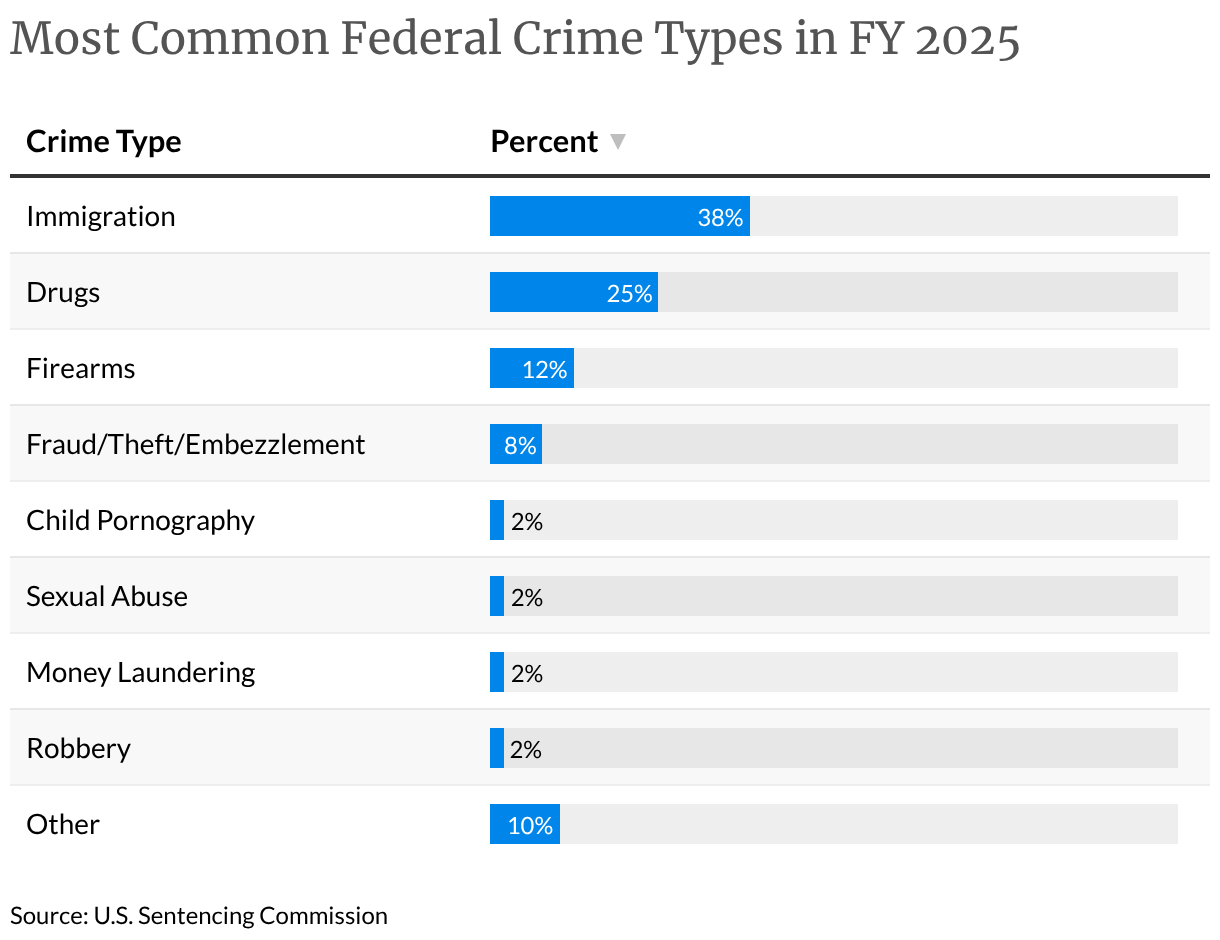
Immigration remained the most prevalent crime type at 38 percent, followed by drug trafficking at 25 percent. Firearms encompassed 12 percent of cases, and fraud cases were nearly eight percent.

For nearly three decades, these four crime types have comprised the majority of federal felonies and Class A misdemeanors. However, while the number of immigration cases increased by eight percentage points in FY 2025, cases in the remaining most prevalent crime types decreased. Drug trafficking decreased by five percentage points, and firearms and fraud cases decreased by about one percentage point each.
The judicial circuits that encompassed the largest caseloads were the Fifth circuit with 33 percent of all federal cases; the Ninth with 17 percent of federal cases; and the Tenth circuit with nine percent of the federal caseload. The districts with the highest caseloads were the Districts of Western Texas, Southern Texas, and Arizona, which together accounted for one-third of all cases reported to the Commissions.
The smallest percentage of the overall federal caseload in FY 2025 was in the DC circuit (less than one percent), and the First Circuit at nearly three percent.
Individual Characteristics of Sentenced Individuals
Similar to previous years, males accounted for 88 percent of the total number of sentenced individuals. Males were most commonly sentenced for immigration offenses (39 percent) as compared to 31 percent the previous year. Females were most commonly sentenced for drug trafficking, 32 percent, which represents a five percent decrease from FY 2024.

Of all sentenced individuals in FY 2025, 55 percent were Hispanic, 23 percent were Black, 18 percent were White, and four percent were other.1
Hispanic individuals were most often sentenced for an immigration offense (96 percent of all immigration offenses), while Black individuals were most often sentenced for drug trafficking (nearly 31 percent of all drug trafficking cases). Moreover, the majority of child pornography cases, 73 percent, involved White individuals.

In FY 2025, the number of U.S. citizens who were sentenced decreased to 56 percent from 65 percent the previous year. Conversely, the number of non-U.S. citizens who were sentenced increased to 44 percent from 35 percent the previous year.
U.S. citizens were most often sentenced for drug trafficking (nearly 81 percent of these offenses) while non-U.S. citizens were most often sentenced for immigration crimes (90 percent of these offenses).

The average age of sentenced individuals in FY 2025 was 38, unchanged from the previous year. Of all persons sentenced, 23 percent were aged 41-50 while three percent were under the age of 21. In both of these age groups, the sentence was most often for an immigration crime. Individuals over the age of 60 comprised less than four percent of all sentenced individuals.
Individuals who did not graduate from high school represented 45 percent of sentenced individuals, and high school graduates were 32 percent. College graduates accounted for six percent of all sentenced individuals.
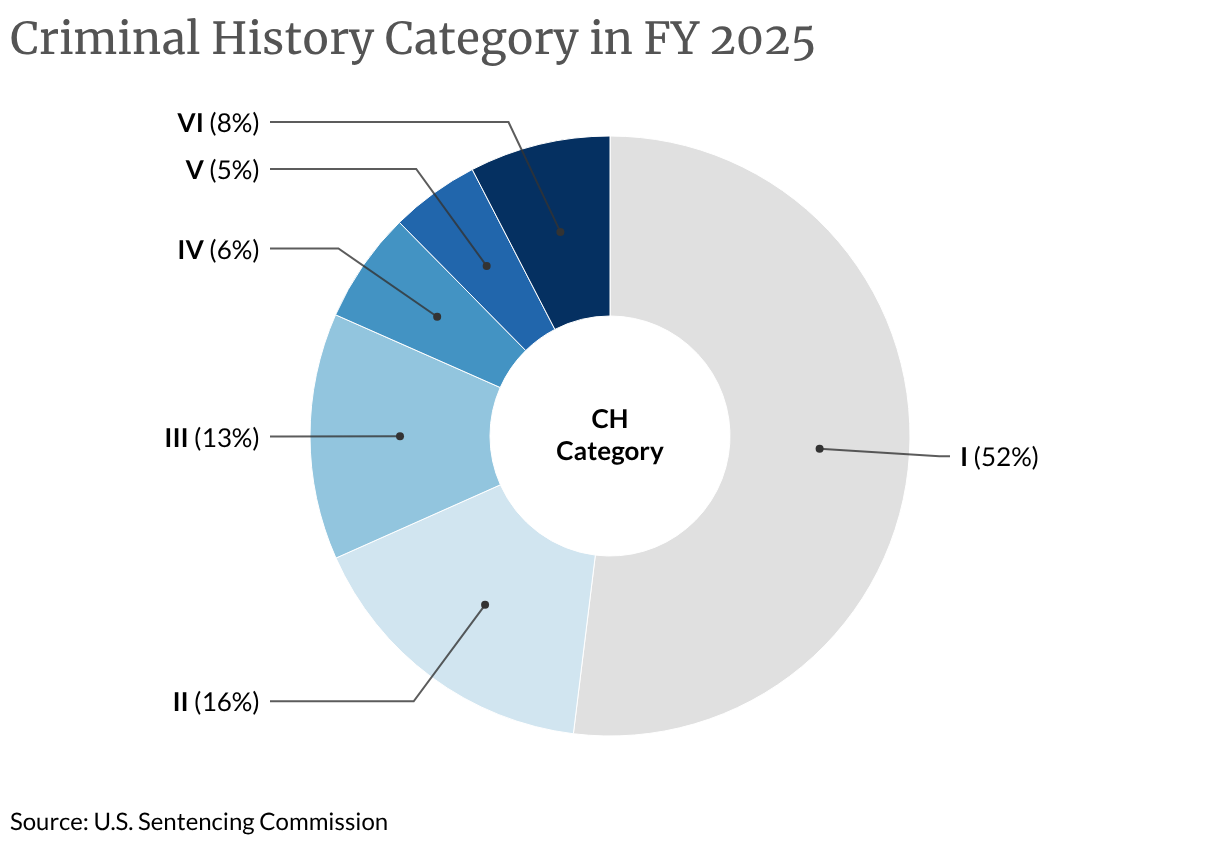
More than half, 52 percent of sentenced individuals were assigned to Criminal History Category (CHC) I, the lowest category. Neary one third were in CHCs II and III (16 percent and 13 percent, respectively). The remaining 18 percent were in the highest three categories: CHC IV (6 percent), CHC V (5 percent), and CHC VI (nearly 8 percent).
In FY 2025, 1,211 individuals were sentenced as “career offenders” (defined under §4B1.1) and 159 were sentenced as “armed career criminals” (defined under §4B1.4).
Case Disposition and Sentence Imposed
Guilty pleas continue to constitute the vast majority of cases in the federal criminal justice system. In FY 2025, 98 percent of cases resulted in a guilty plea, while the remaining were cases were resolved through a trial.
Trials occurred most frequently in murder cases (25 percent), individual rights cases (23 percent) and kidnapping cases (21 percent).2 More than 99 percent of immigration cases resulted in a guilty plea.
A sentence of incarceration was imposed in most cases. More than 90 percent of individuals sentenced received a prison only sentence and six percent received a sentence of probation only. Two percent of individuals received a sentence of prison along with alternatives, and one percent received probation and alternatives. Less than half of one percent received a fine only sentence.
In FY 2025, the average sentence imposed was 47 months, a five-month decrease from the previous year. However, as in years past, the length of sentence varied based on the type and seriousness of the offense. Individuals sentenced for murder and sexual abuse received average sentences of 286 and 230 months, respectively, while food and drug crimes, for example, resulted in an average sentence of five months.3


Immigration, the most prevalent crime type in FY 2025, resulted in an average sentence of 10 months, whereas the average sentence for drug trafficking, the next most prevalent crime, was 87 months.
Fines, which also included restitution orders in some cases, were imposed in seven percent of all cases. The cases in which fines were most common were antitrust (94 percent), environmental (55 percent), and drug possession (34 percent).
Courts ordered restitution to be paid to the victim of the crime in 13 percent of all cases last year. Restitution was most commonly ordered in cases involving tax (93 percent), fraud, theft and embezzlement (80 percent), and child pornography cases (68 percent).
The total amount of fines and restitution ordered in FY 2025 was $25.6 billion.
Three quarters of sentenced individuals (76 percent) were sentenced to serve a term of supervised release, and the average length of supervision was 46 months in FY 2025. Individuals sentenced for child pornography (99 percent) or sexual abuse (99 percent) were among those individuals most likely to be sentenced to supervised release.
In immigration cases, which was the largest single crime type in the federal caseload, supervised release was imposed in 61 percent of the cases, reflecting that many individuals convicted of an immigration offense are often ordered deported from the United States once they complete their incarceration sentence.
The number of organizations sentenced in FY 2025 increased to 110 from 80 in the previous year. The courts ordered those sentenced organizations to pay a total of $2.99 billion in fines.
The Most Common Crimes
Immigration
Immigration cases were the most prevalent crime type again in FY 2025 and increased by eight percentage points from the previous year. Nearly 96 percent of these cases received a sentence of imprisonment, and the average sentence was 10 months.
In FY 2025, 80 percent of immigration cases were offenses related to unlawfully entering or remaining in the United States. Cases pertaining to smuggling,transporting, or harboring an unlawful alien were 17 percent. The remaining cases involved other types of immigration offenses.
Most of those sentenced for an immigration offense were Hispanic (96 percent). Over 92 percent of these individuals were male and 89 percent were non-U.S. citizens.
Drugs
Drug offenses were the second most common federal crime type again in FY 2025, encompassing nearly 25 percent of federal cases. The number of drug cases declined slightly from the previous year.
Nearly 97 percent of those individuals sentenced for drug trafficking were sentenced to imprisonment. The average age for those individuals was 38, similar to the overall average of federally sentenced individuals. The average sentence in drug trafficking cases was 87 months but varied by the type of drug.
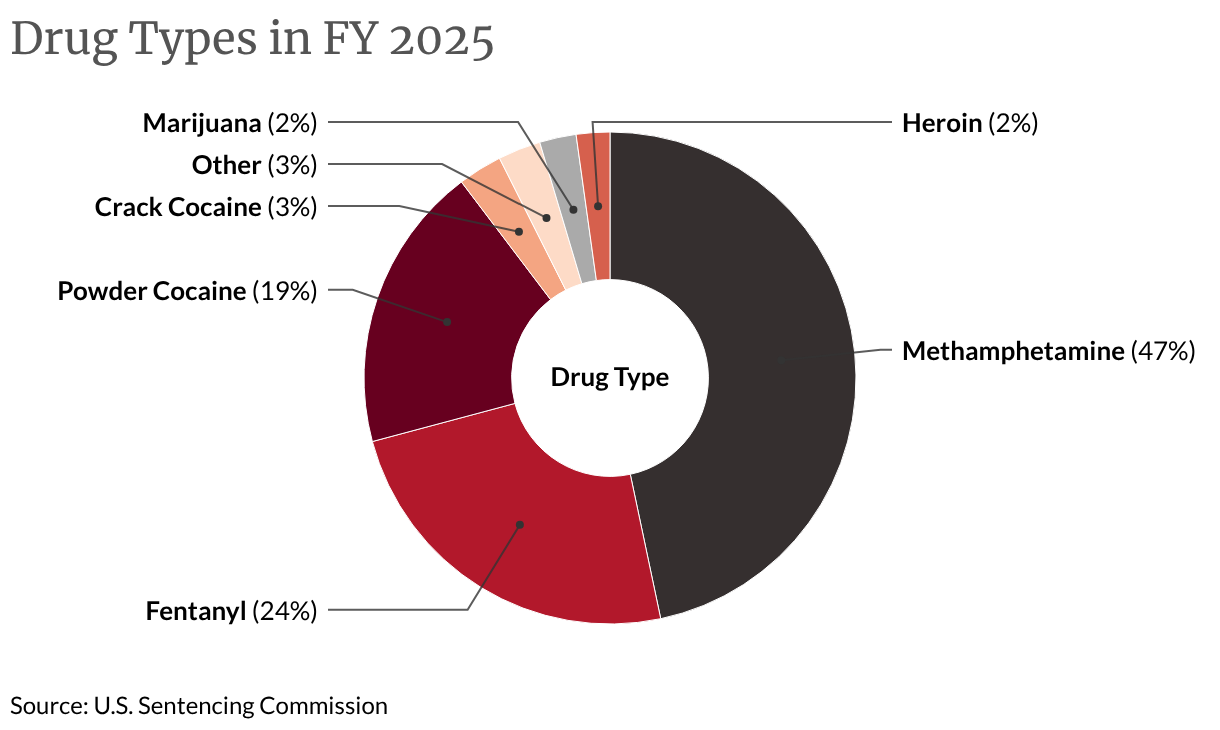
For more than a decade, methamphetamine has been the most prevalent drug type, constituting 47 percent of all drug trafficking cases in FY 2025.
For the second year in a row, fentanyl was the second most common drug type, at 24 percent, an increase of two percent from FY 2024. In 2018, fentanyl accounted for just two percent of all drug cases, but has increased each year since.
In FY 2025, powder cocaine trafficking was 19 percent of federal cases; crack cocaine was four percent; and heroin and marijuana were two percent each. Nearly three percent of drug cases involved an “other” type of drug.
Of individuals sentenced for drug trafficking, 42 percent were Hispanic, 31 percent were Black, and 24 percent were White. Nearly 85 percent of individuals sentenced for drugs were male.
U.S. citizens accounted for 81 percent of all individuals sentenced for drug trafficking, while 19 percent were non-U.S. citizens.
Individuals sentenced for methamphetamine trafficking received the highest average sentences of 105 months. The average sentence for fentanyl trafficking was 81 months, followed by crack cocaine, 69 months. Those who received sentences for powder cocaine received average sentences of 68 months; heroin, 63 months, and marijuana 44 months.

Firearms and Other Weapons
Crimes involving firearms also decreased slightly in FY 2025 but remained the third most common federal crime. Of those individuals sentenced for firearms, 94 percent received a sentence of imprisonment. The average age of individuals sentenced for a firearm crime was 35 years, slightly younger than the average age of all sentenced individuals. The average sentence imposed for firearms offenses was 51 months.
Nearly 96 percent of firearms cases in FY 2025 pertained to the unlawful receipt, possession or transportation of a firearm. Black individuals comprised 56 percent of those sentenced for a firearm offense, and 20 percent each were White or Hispanic. Of all individuals sentenced for a firearm offense, 96 percent were male and 95 percent were U.S. citizens.
The number of firearms offenses decreased by about one percent since FY 2024.
Economic Crimes
In FY 2025, there were 6,389 individuals sentenced under one of the basic economic crime guidelines, Chapter 2 Part B of the Guidelines Manual. Of these individuals, 76 percent were sentenced for fraud, theft, and embezzlement. The remaining sentences pertained to several other economic offenses.
Just over 75 percent of individuals sentenced for fraud received prison sentences, and the average age of those individuals was 42, higher than the average of all sentenced individuals. The average sentence imposed in fraud cases was 22 months.
More than 43 percent of individuals sentenced for an economic crime were Black, 32 percent White, and 19 percent were Hispanic. Moreover, 76 percent were male, and 88 percent were U.S. citizens. The largest percentage of individuals sentenced for economic crimes, 32 percent, were high school graduates.
The losses in these cases averaged $4.4 million , but the median loss amount was $149,856.
Organizational Cases
In FY 2025, 110 organizations were sentenced for a federal offense, a 38 percent increase from FY 2024. Most, 37 percent, were environmental crimes and 23 percent were fraud crimes. The additional crimes for which organizations were sentenced included money laundering, antitrust, food and drugs, import and export crimes, among others.
53 percent of organizations sentenced were corporations while 37 percent were LLCs.
Organizations that provided services, 26 percent, were most often sentenced in FY 2025. Electric and gas organizations were 16 percent of those sentenced, and health care services and supplies organizations were 11 percent of those sentenced. The remaining organizational cases were comprised of retail trade, construction and other businesses.
Two-thirds of the organizations sentenced had fewer than 50 employees, while organizations with 1,000 or more employees accounted for 19 percent.
Nearly 92 percent of organizations pleaded guilty in FY 2025, 76 percent were sentenced to a term of probation, and 16 percent were ordered to implement ethics or compliance programs.
Courts ordered sentenced organizations to pay a total of $2.99 billion in fines and $258 million in restitution in FY 2025.
Resentencings and Other Modifications of Sentence
In FY 2025, the Commission received documentation on 11,000 resentencings and other modifications of a sentence. A resentencing or other modification of sentence was granted in 3,479 cases. Nearly 38 percent of these cases were related to retroactive application of an amendment to the sentencing guidelines.
The next most common reason given in these cases was a modification of a restitution order, accounting for 18 percent of those cases. Sentence reductions for individuals who provided substantial assistance to the government in its investigation or prosecution of another person after the individual was first sentenced were the third-most common type of sentence modification. Those cases accounted for 17 percent of all resentencings and other modifications of sentence.4

Training and Outreach
The Commission continues to provide specialized seminars, workshops, and training programs for judges, probation officers, law clerks, prosecutors, and defense attorneys on application of the guidelines and federal sentencing generally. In 2025, the Commission trained individuals from all 94 federal districts.
The Commission’s ongoing investments in eLearning, remote training platforms, and other online resources continue to provide effective, efficient, and accessible training. In 2025, the Commission conducted 39 virtual training sessions with more than 7,700 participants. The Commission’s online and on-demand courses were accessed nearly 2,700 times, a nearly two-fold increase from the previous year, and its eLearning courses were accessed approximately 9,500 times.
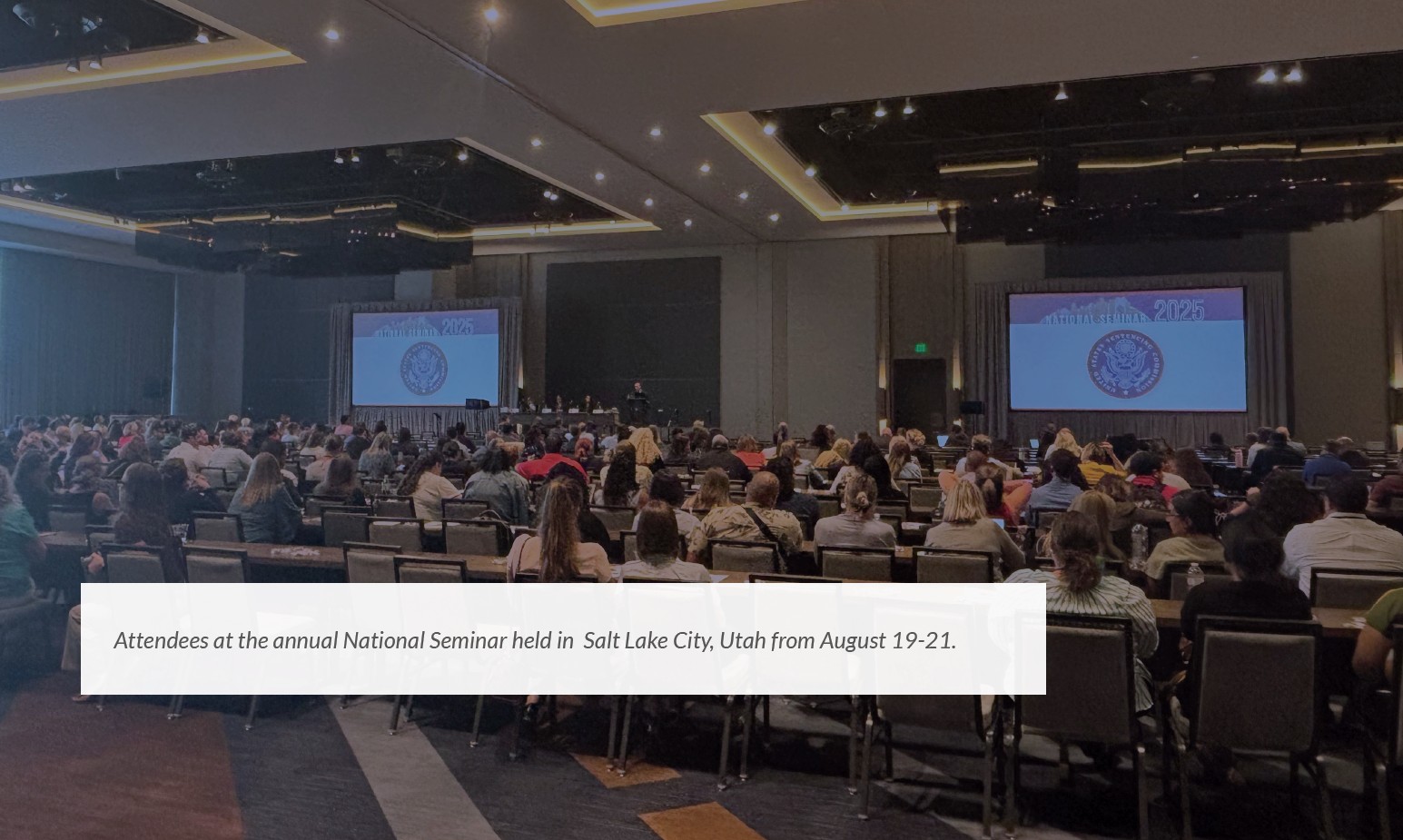
Additionally, the Commission conducted 50 in-person training programs attended by approximately 2,700 individuals. The Commission held its Annual National Seminar, with more than 700 judges, probation officers, defense attorneys, prosecutors, and others participating, and its annual Judge’s Seminar was attended by 65 judges representing districts from across the nation.
In addition to staff-led training seminars, sessions and panels, the commissioners themselves provided training and engaged with judges and practitioners by visiting many circuit conferences, participating in various bench and bar conferences, as well as programs sponsored by the Federal Judicial Center and other criminal justice organizations.
The Commission maintains a HelpLine to assist judges, practitioners and probations offices with guideline application and related questions. In 2025, the Commission responded to approximately 3,000 inquiries.
Moreover, the Commission prioritizes its outreach to Congress, keeping members of Congress and their staff apprised of the Commission’s work and reports, as well as responding to requests for sentencing data and information.
Summary
The United States Sentencing Commission continues to fulfill its statutory responsibilities, including evaluating the fairness and effectiveness of the sentencing guidelines, advising Congress on federal sentencing policy, and serving as a clearinghouse of timely sentencing research and data.
Furthermore, the Commission is committed to providing this current data and guidance to federal judges through training and online information resources. The Commission’s efforts are calibrated to protect public safety and provide that the statutory purposes of sentencing are achieved. The Commission will continue these efforts going forward and is prioritizing ways to make the guidelines work better, thus promoting efficiency and effectiveness and reducing unnecessary litigation.
Endnotes
1 Information on race is obtained from the Presentence Investigation Report and recorded in separate categories of race and ethnicity. Race data indicate whether the sentenced individual is White, Black, Native American or Alaskan Native, Asian, Pacific Islander, Multiracial, or “Other.” Ethnicity data indicate whether an individual is of Hispanic origin. Individuals whose ethnic background is designated as Hispanic are represented as Hispanic in all analysis in this report, regardless of racial background.
2 Individual rights cases are those in which the court applied a guideline in Part H of Chapter 2 of the Guidelines Manual. These cases include violations of civil rights, violations of political rights (such as the right to vote), the interception of communications, and the disclosure of private or protected information.
3 Probation sentences are included in the calculation of average sentence as zero months.
4 See Fed. R. Crim. P. 35(b).