
CRIME VICTIMS FACT SHEET
Federal Offenses Involving Hate Crimes
Chapter Three, Part A of the federal sentencing guidelines covers offenses involving victim-related adjustments. Section 3A1.1(a) covers an adjustment for an offense involving hate crime motivation.1
In fiscal year 2023, 39 cases involved these guidelines, and each had an identifiable victim. In 30 of the 39 cases, at least one victim was a person.2 Victim information was available for each of these 30 cases based on court documents submitted to the U.S. Sentencing Commission.3
Click the button for a PDF or learn more below.
NUMBER OF VICTIMS
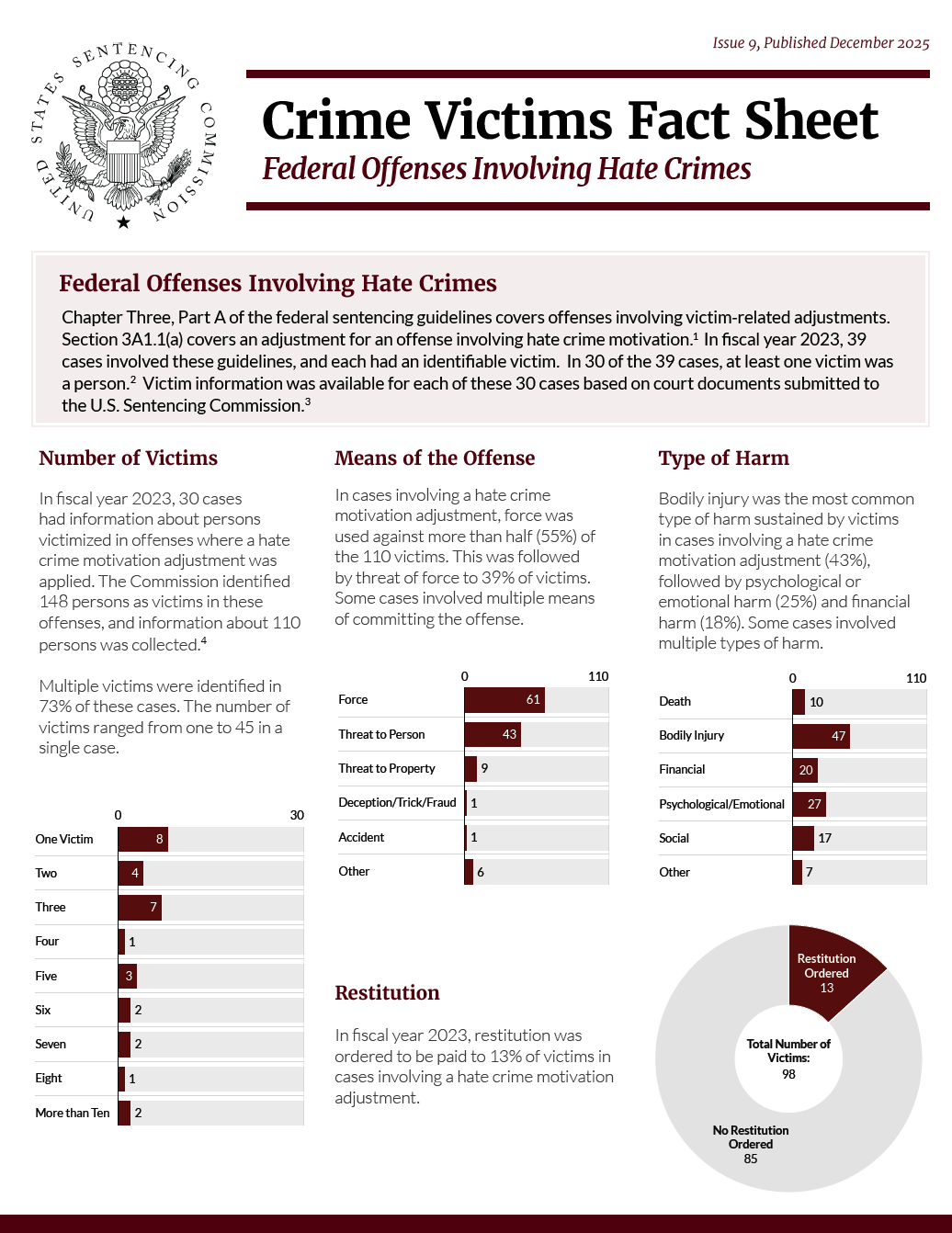
In fiscal year 2023, 30 cases had information about persons victimized in offenses where a hate crime motivation adjustment was applied. The Commission identified 148 persons as victims in these offenses, and information about 110 persons was collected.4
Multiple victims were identified in 73% of these cases. The number of victims ranged from one to 45 in a single case.
MEANS OF THE OFFENSE
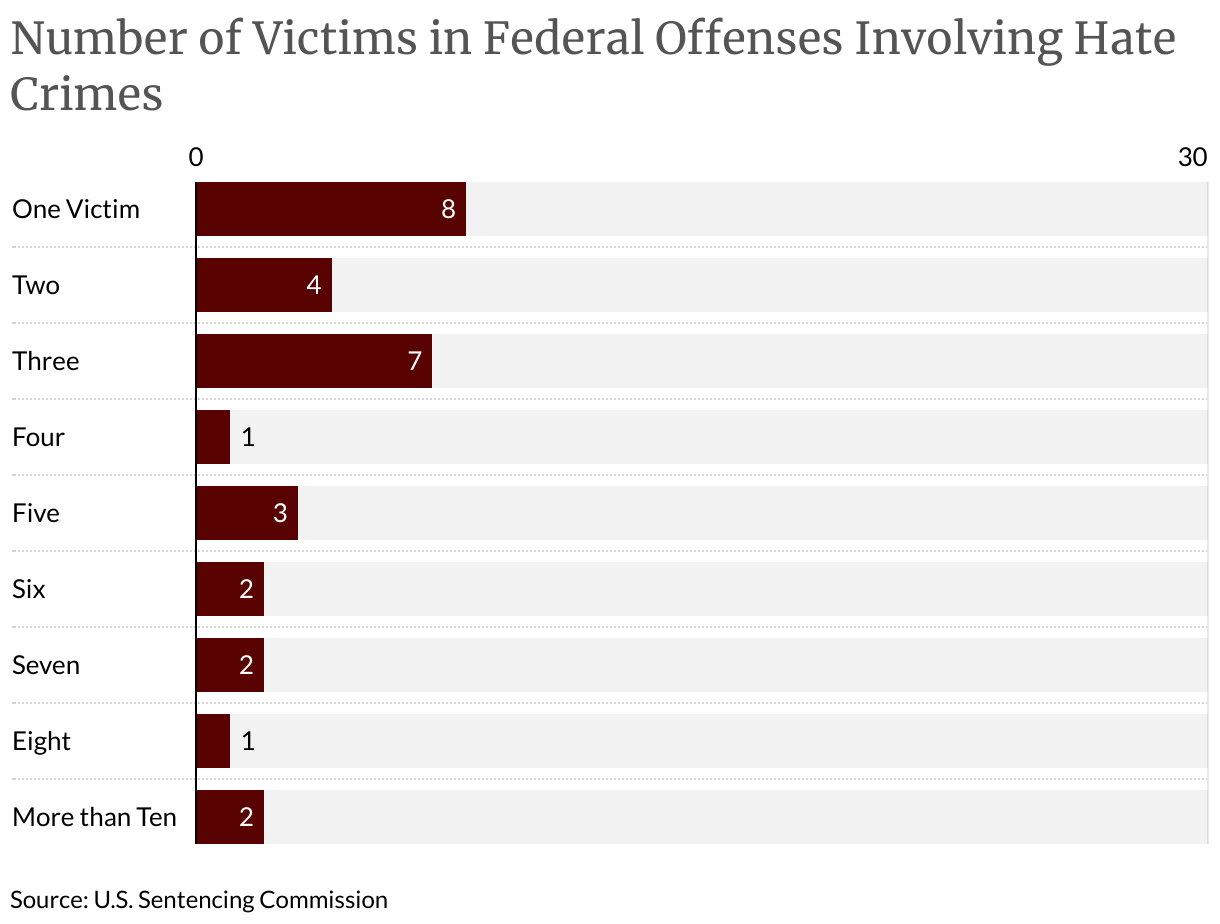
In cases involving a hate crime motivation adjustment, force was used against more than half (55%) of the 110 victims. This was followed by threat of force to 39% of victims. Some cases involved multiple means of committing the offense.
TYPE OF HARM
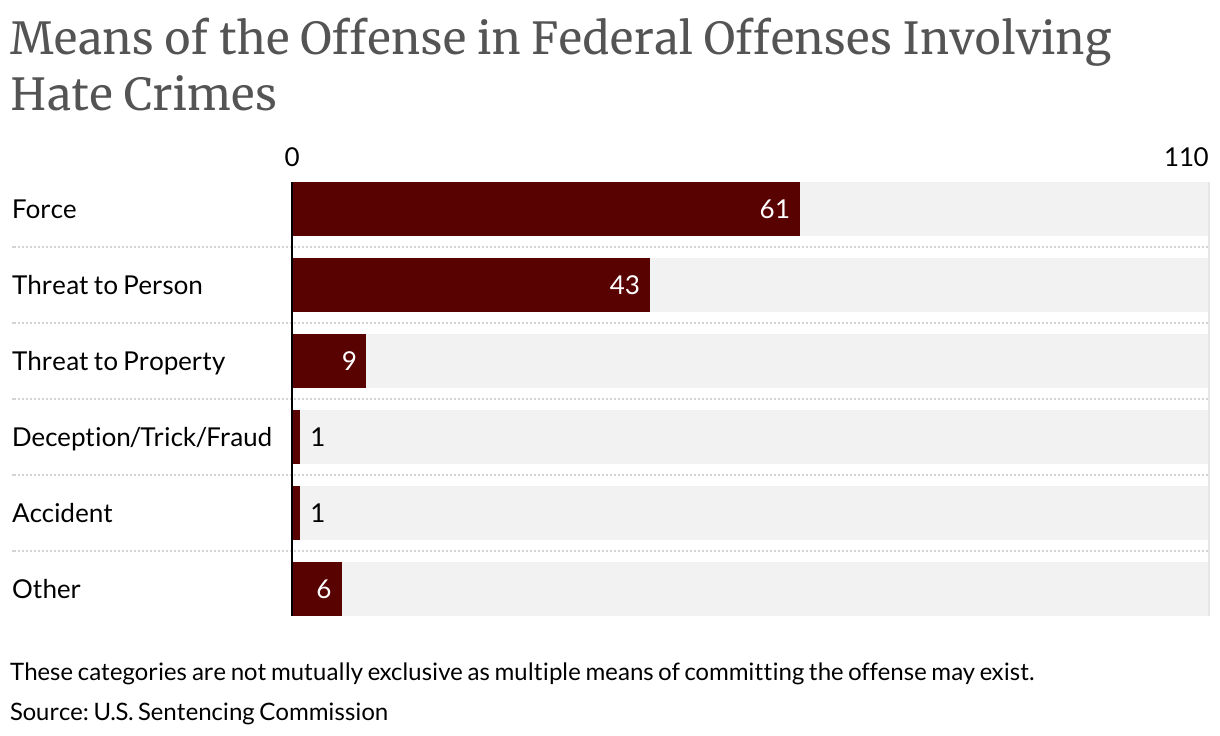
Bodily injury was the most common type of harm sustained by victims in cases involving a hate crime motivation adjustment (43%), followed by psychological or emotional harm (25%) and financial harm (18%). Some cases involved multiple types of harm.
RESTITUTION
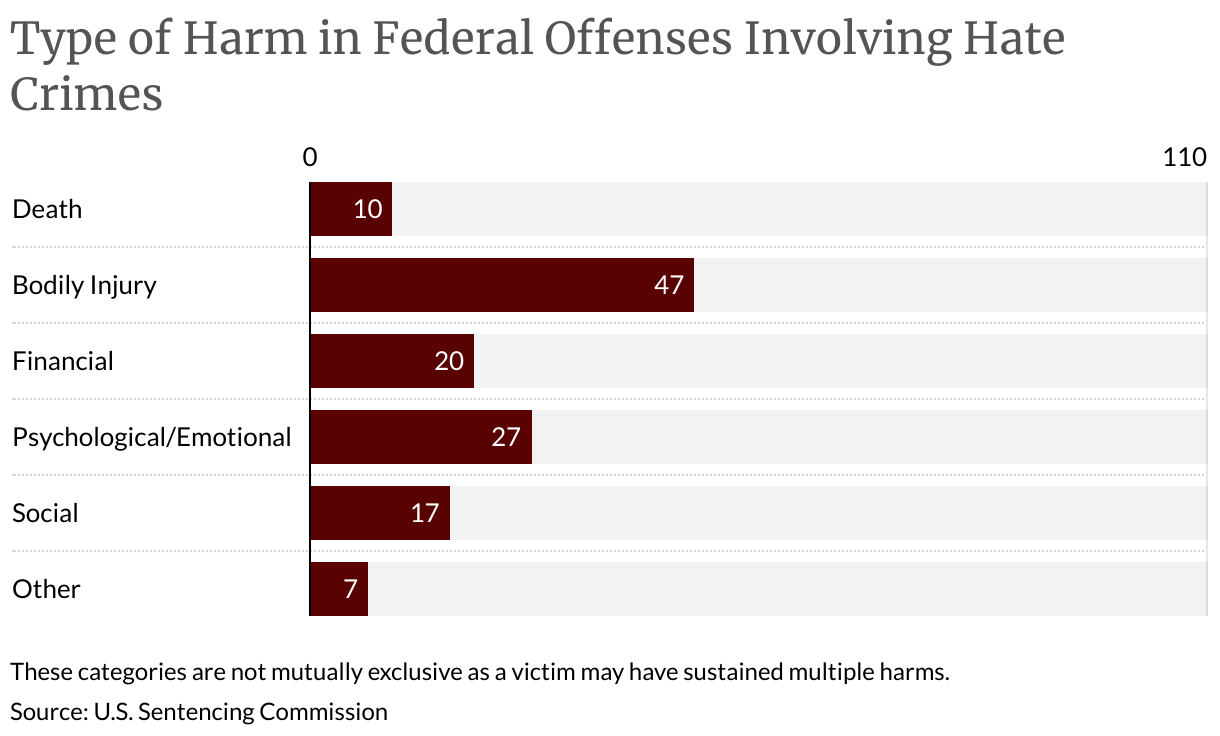
In fiscal year 2023, restitution was ordered to be paid to 13% of victims in cases involving a hate crime motivation adjustment.

RELATIONSHIPS BETWEEN VICTIMS AND INDIVIDUALS WHO CAUSED HARM
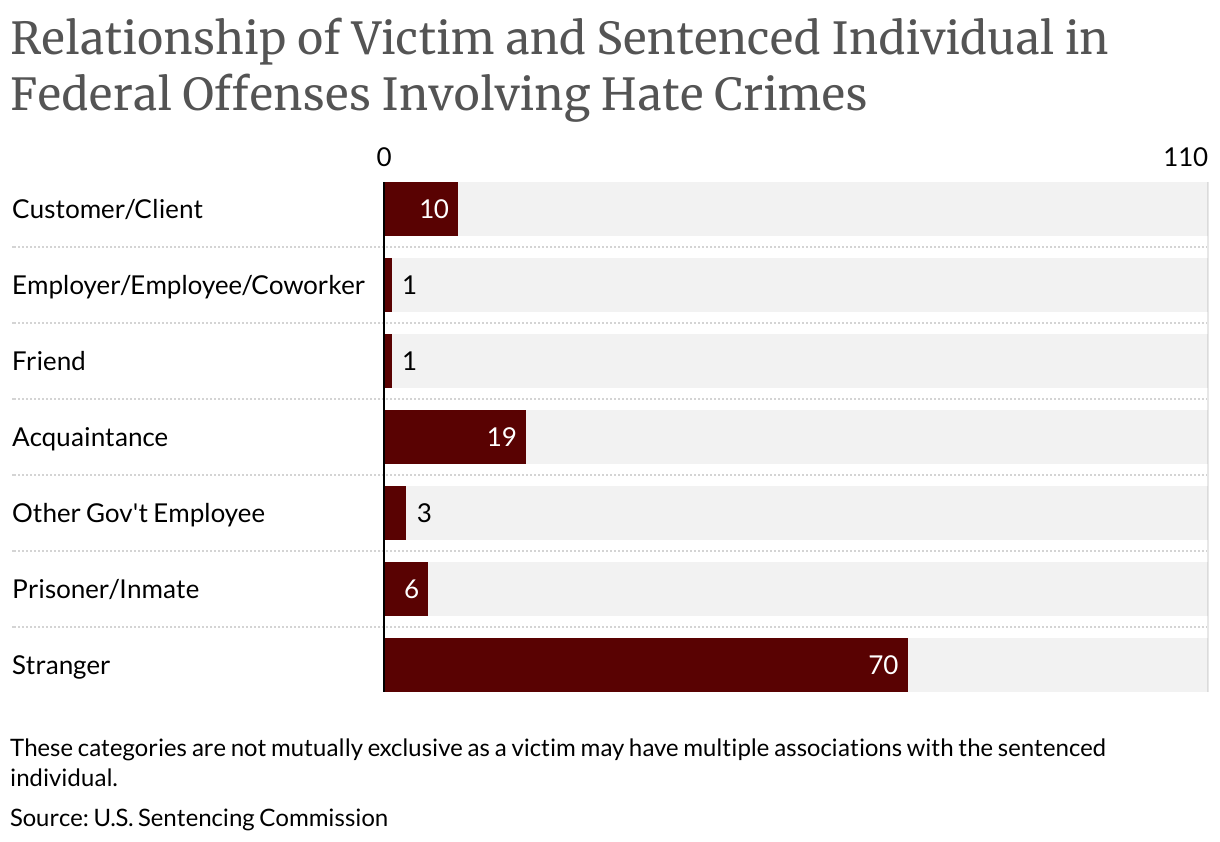
In cases involving a hate crime motivation adjustment, the most common association between victims and the individuals who caused them harm was as a stranger (64%). The next most common was as an acquaintance (17%). Some cases involved multiple relationship types.
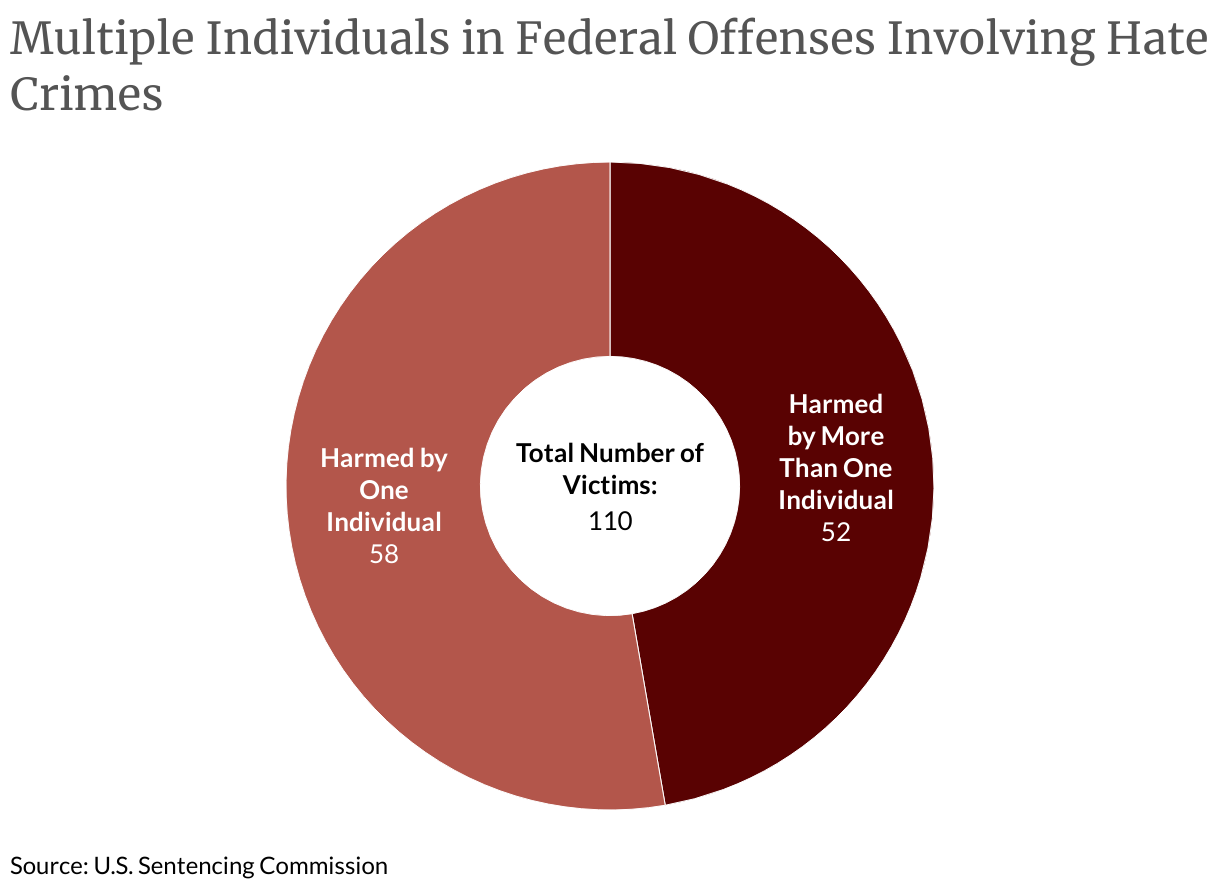
47% of victims in cases involving a hate crime motivation adjustment were harmed by more than one individual.
VULNERABILITY
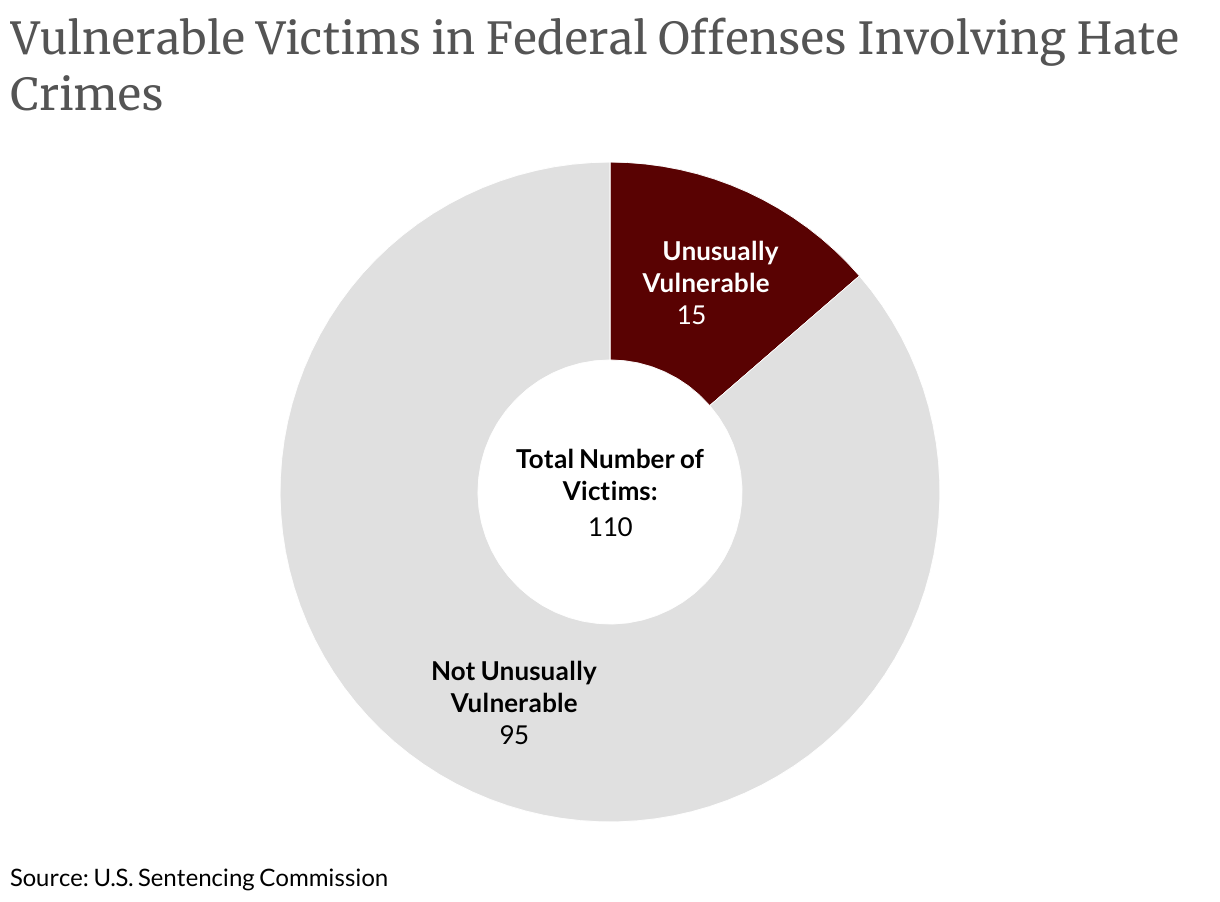
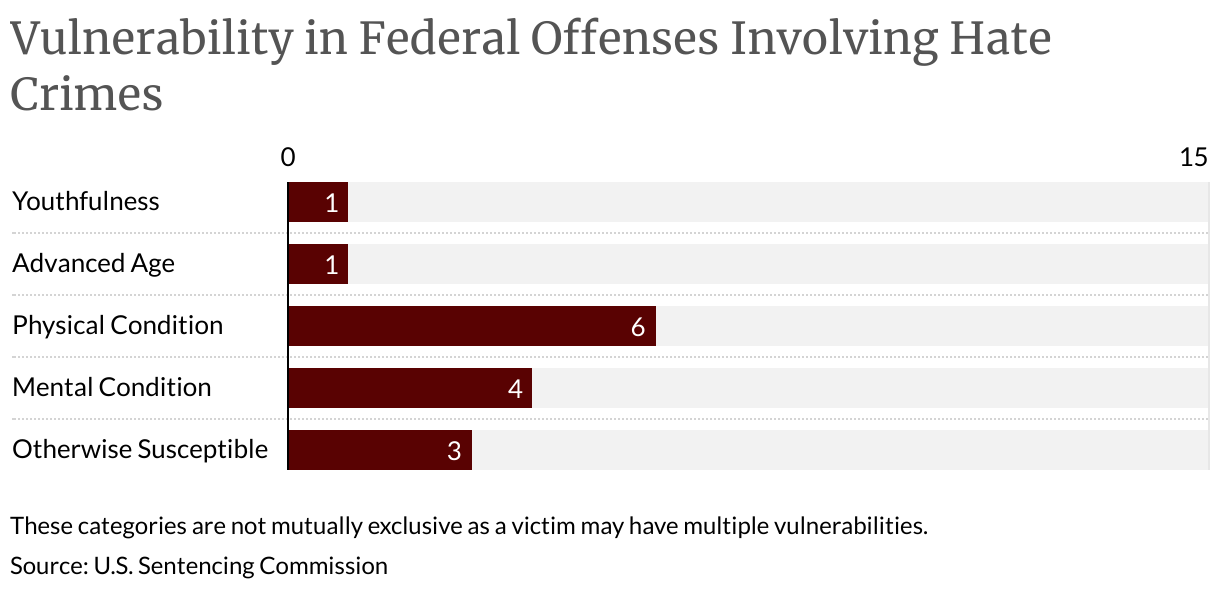
Some cases involving a hate crime motivation adjustment involved victims who were unusually vulnerable due to age, physical or mental condition, or other factors.5 The Commission identified 14% of victims in these cases as unusually vulnerable for one of these reasons. Some cases involved multiple vulnerabilities.
VICTIM CHARACTERISTICS
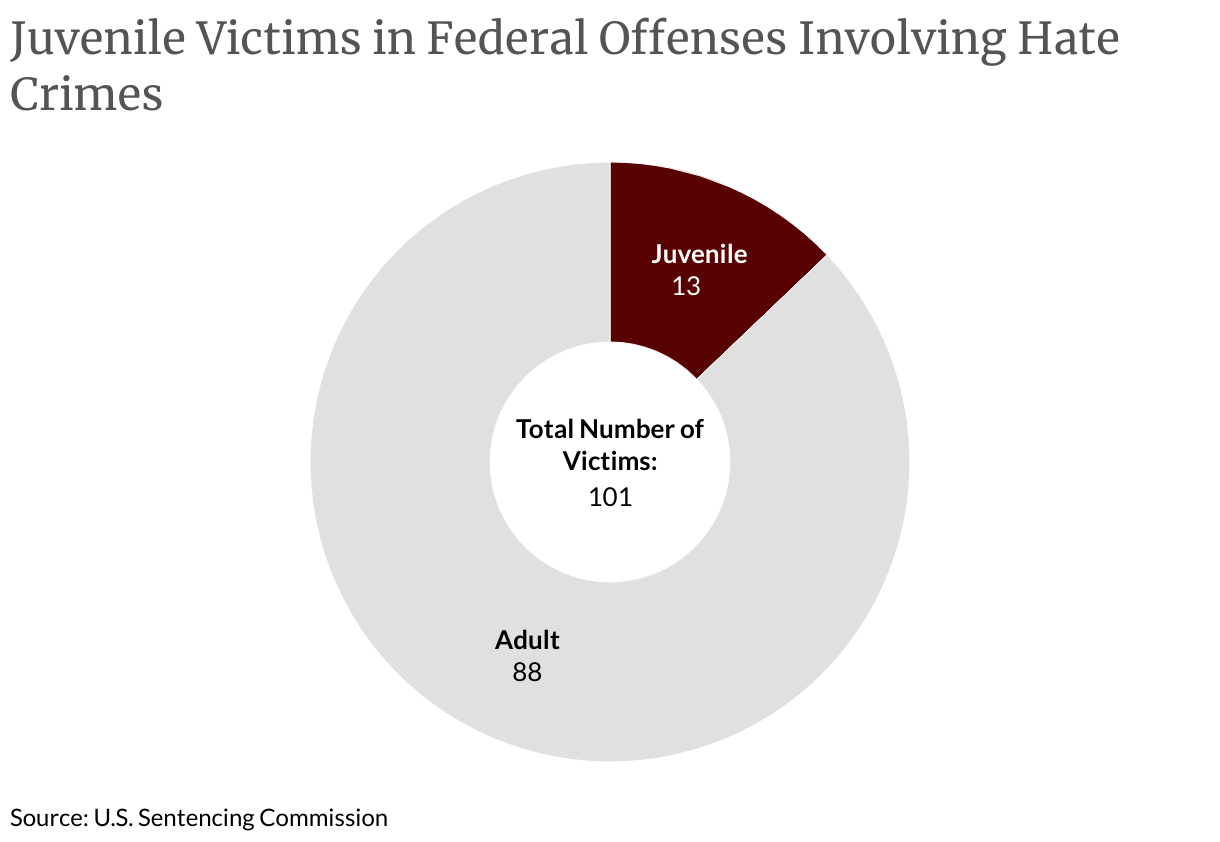
More than one-tenth (13%) of victims in cases involving a hate crime motivation adjustment were juveniles.
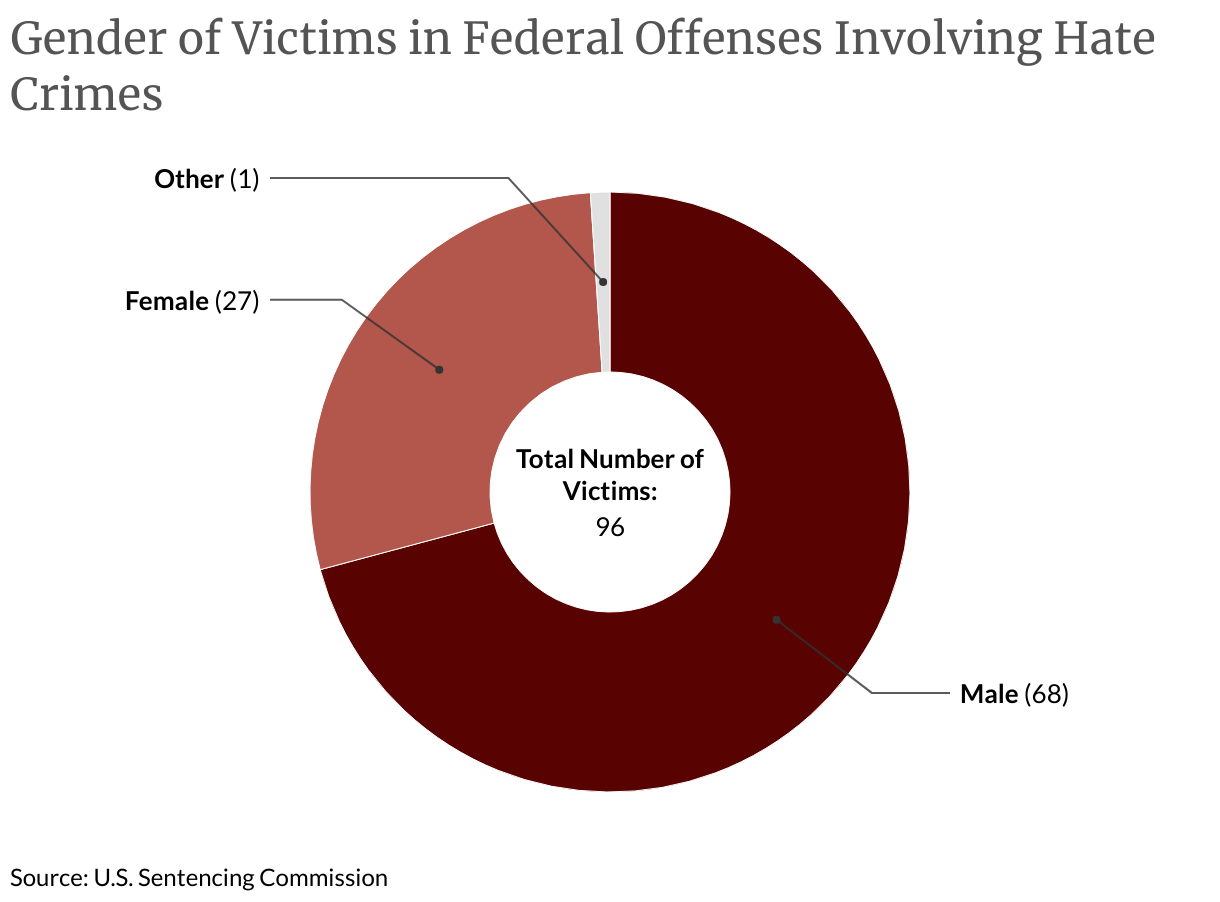
More than one-quarter (28%) of victims in cases involving a hate crime motivation adjustment were female.
ENDNOTES
1 Federal Offenses Involving Hate Crimes include individuals sentenced in fiscal year 2023 in cases involving USSG §3A1.1 (Hate Crime Motivation or Vulnerable Victim), where the court applied the adjustment at USSG §3A1.1(a) (“If the finder of fact at trial or, in the case of a plea of guilty or nolo contendere, the court at sentencing determines beyond a reasonable doubt that the defendant intentionally selected any victim or any property as the object of the offense of conviction because of the actual or perceived race, color, religion, national origin, ethnicity, gender, gender identity, disability, or sexual orientation of any person, increase by 3 levels”). The most common sentencing guideline for an offense involving a hate crime motivation adjustment was USSG §2A2.2 (Aggravated Assault) at 26%.
2 An identifiable victim can be a person, business, government, or other type. This series provides victim information on persons.
3 The Commission’s Crime Victims Fact Sheets series relies on information collected and analyzed through a special coding project undertaken by the Commission to gather information beyond what is regularly collected and reported on by the Commission.
4 The sentencing documents received from the courts by the Commission are often focused on the sentencing event; therefore, some information regarding the victims of the offense was not provided in the documents available for staff review. For this reason, the total number of cases with complete information, and the corresponding number of victims in those cases, will vary by analysis. Victim information was collected for the first ten persons documented in the records.
5 In some, but not all, of these cases the court applied the adjustment at USSG §3A1.1. Vulnerability due to advanced age or youthfulness was determined by the offense conduct stated in the presentence investigation report adopted by the court, and not based on any minimum or maximum age.
SOURCE: U.S. Sentencing Commission, 2023 Victim Datafile, VICFY23.